Sorry about the delay. I shot a wedding on Friday and that set me back a little bit. I have quite a few photos of the Winter Palace and Hermitage, so will be breaking the post into two parts.
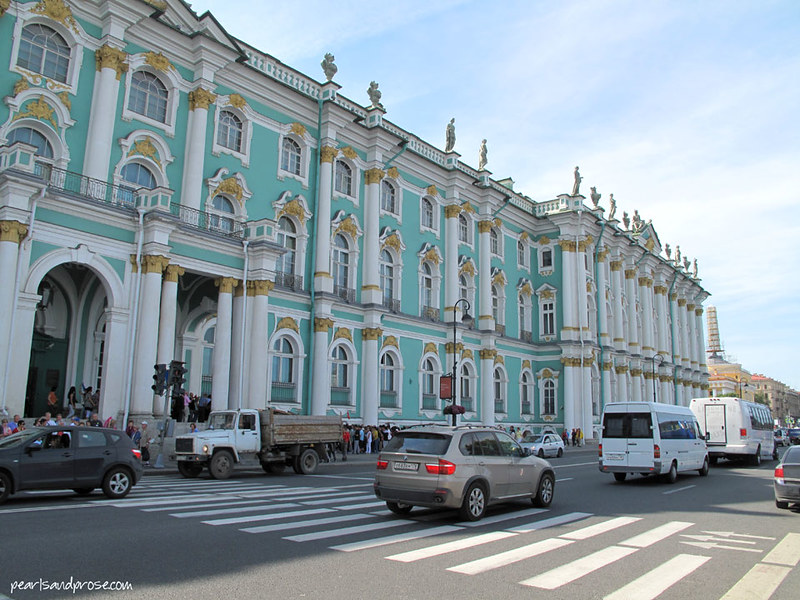
The Winter Palace, which houses the Hermitage, was built between 1754 and 1762 and was designed by the Italian architect Francesco Bartolomeo Rastrelli, the same person who designed the Catherine Palace. You’re probably noticing the similarities now. The exterior facades are 656 feet (200 m.) long and there are one thousand rooms. The Palace was built for Empress Elizabeth.
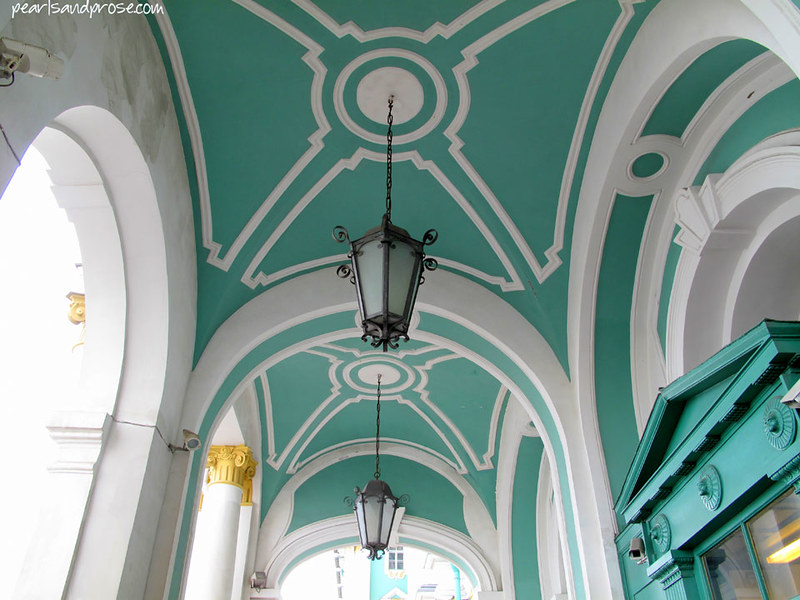
Love that blue.

Our tour group was allowed to enter the Hermitage early, but you can see that it was still quite crowded.
Again, we had to walk very quickly to keep up with our tour guide, but the place has 2.8 million objects to see. My guidebook says it would take nine years to see everything. I was fortunate to view an exhibition of Hermitage paintings in Washington D.C. years ago, so I wasn’t upset about missing stuff. We still saw a lot.
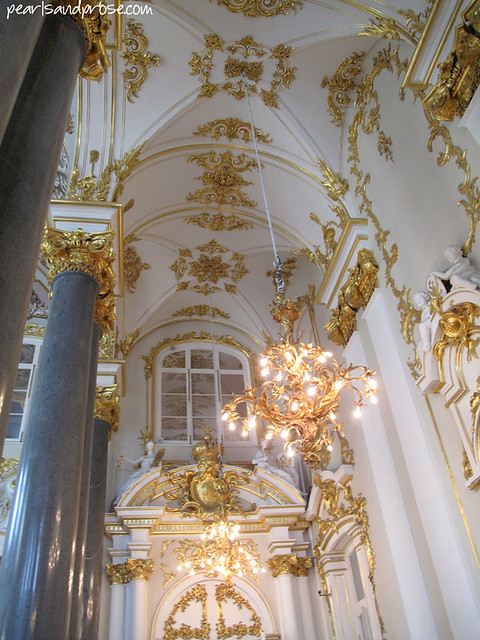
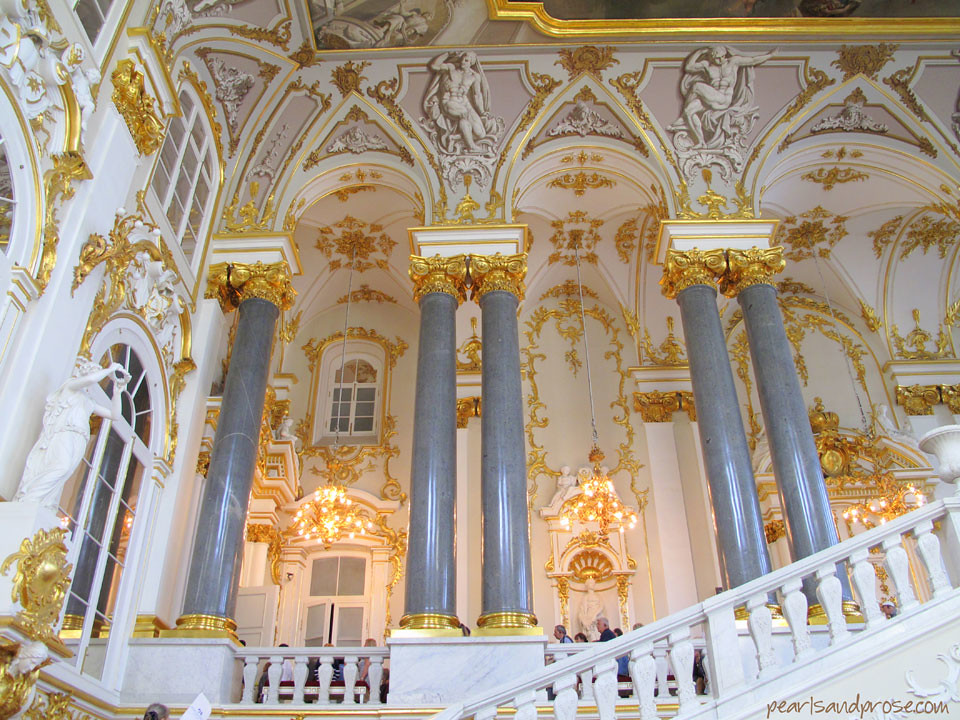
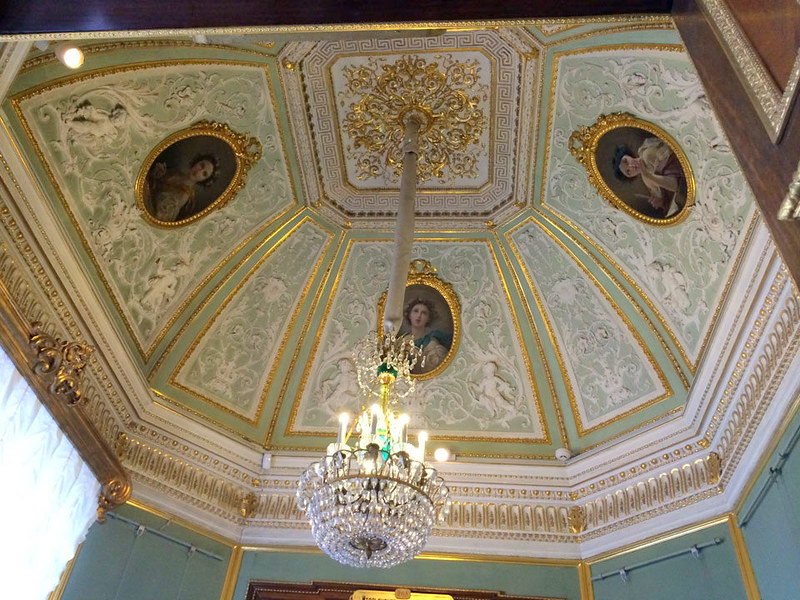
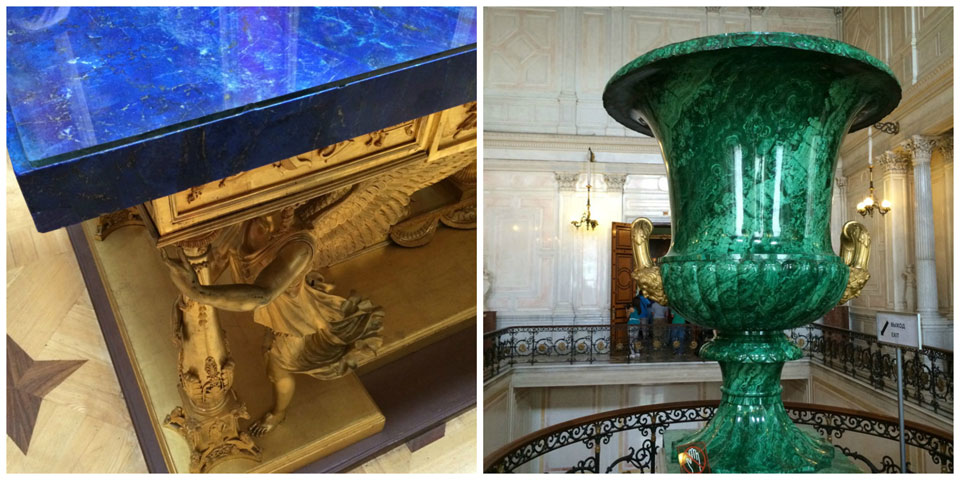
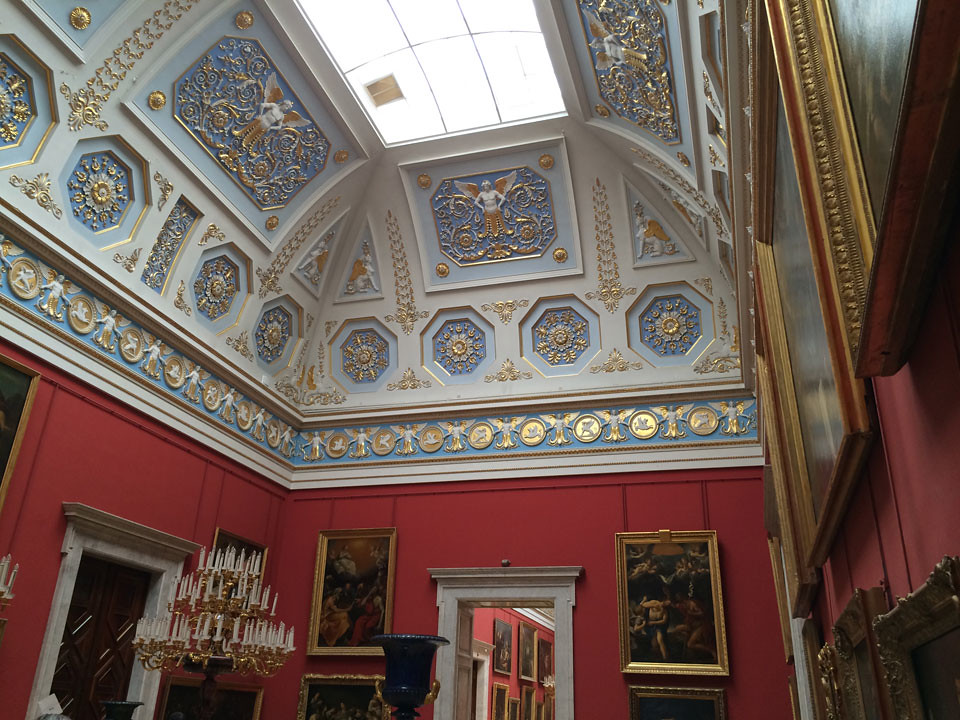
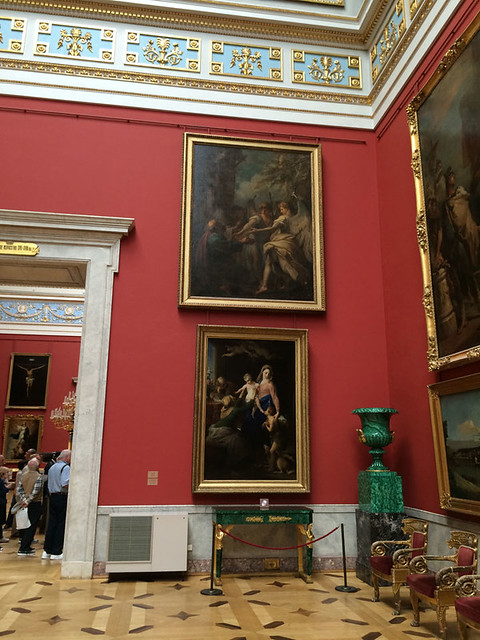
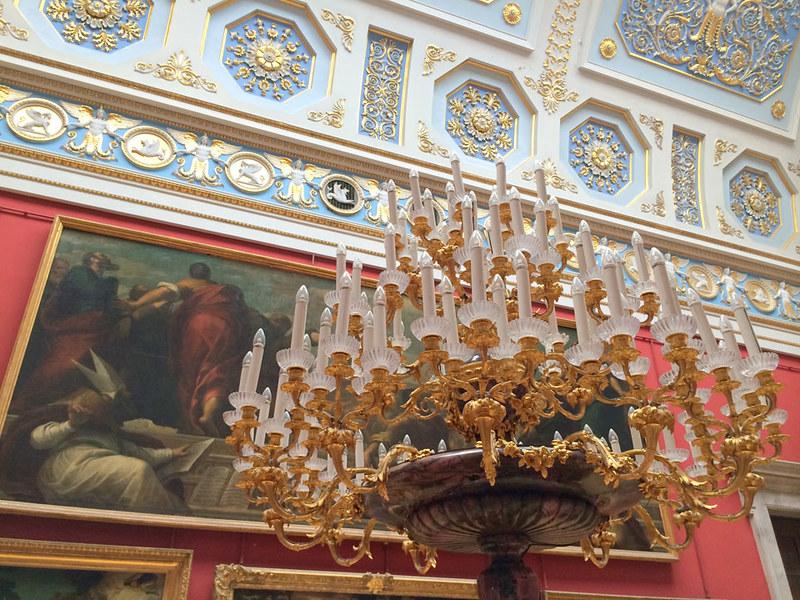
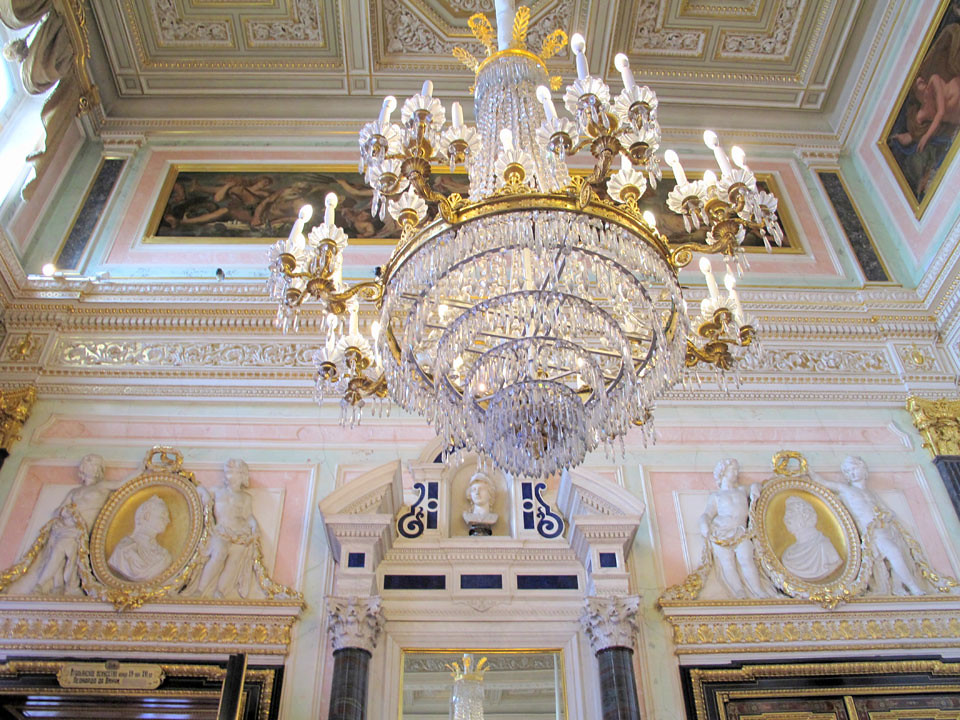
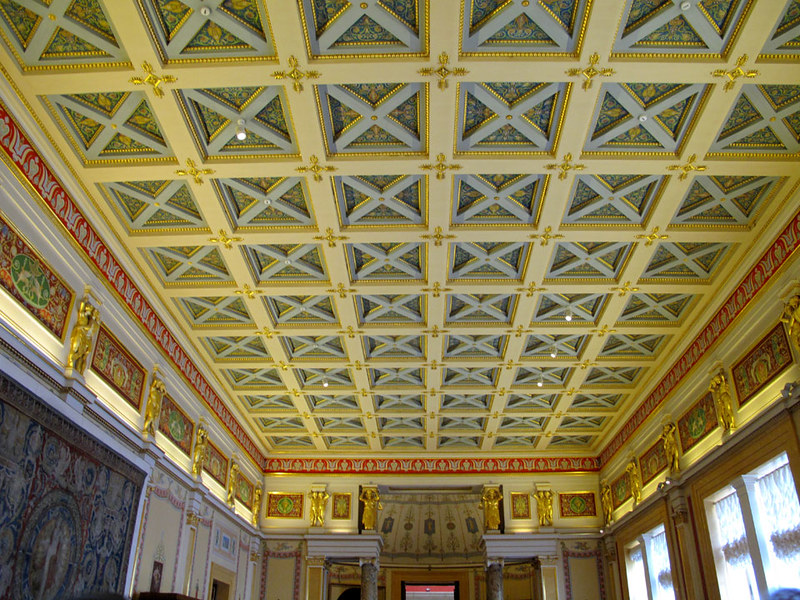
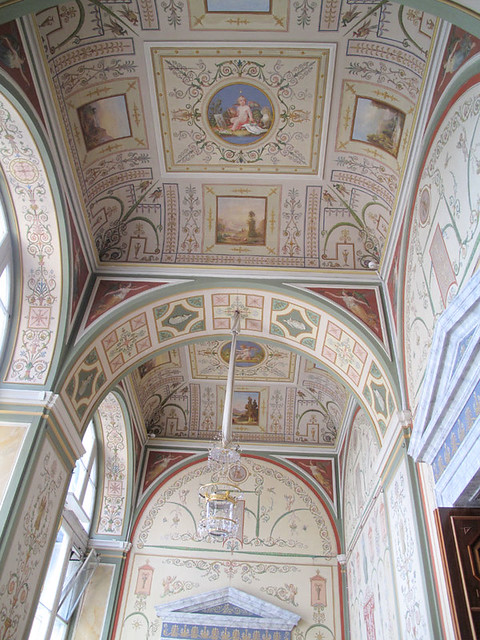
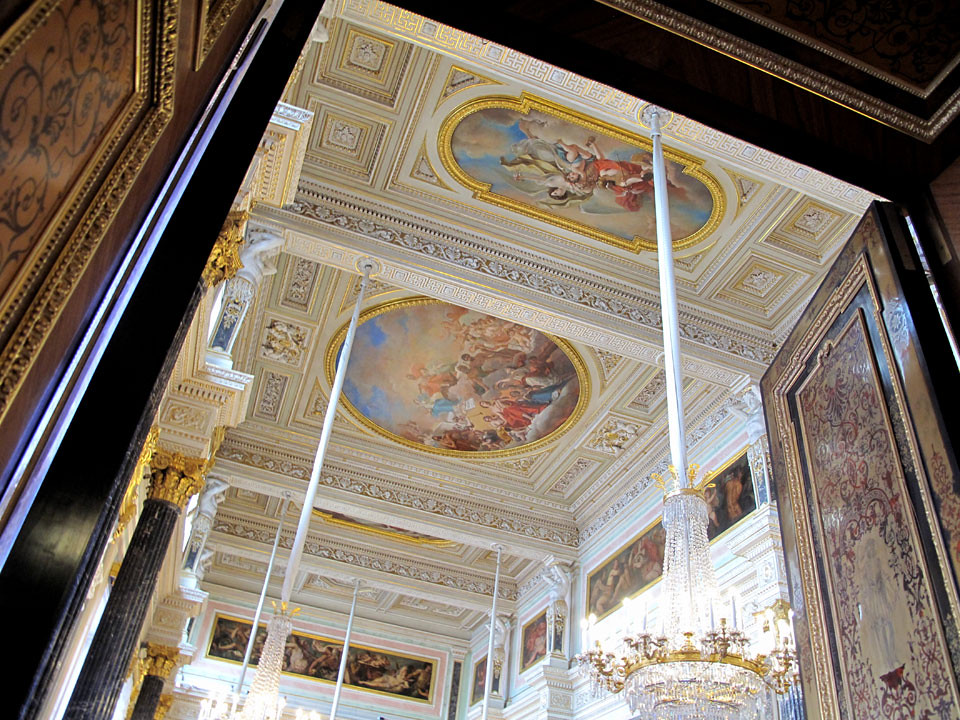
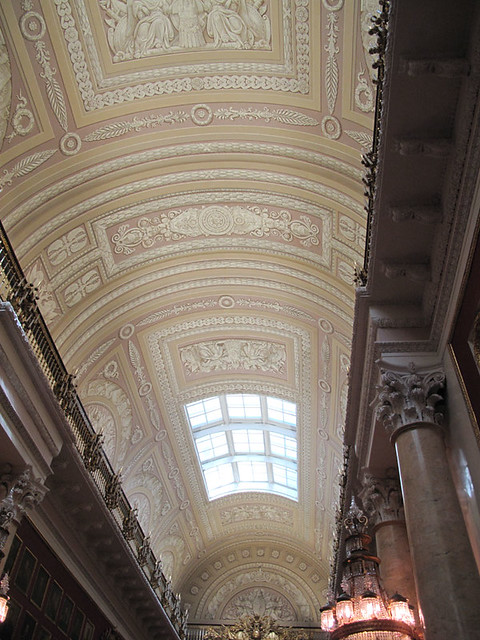
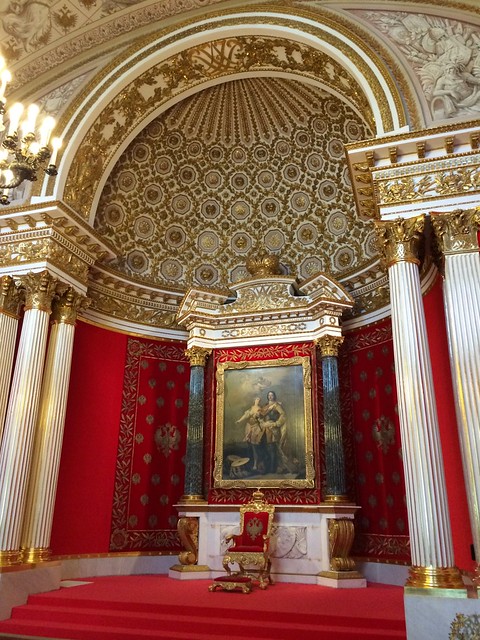
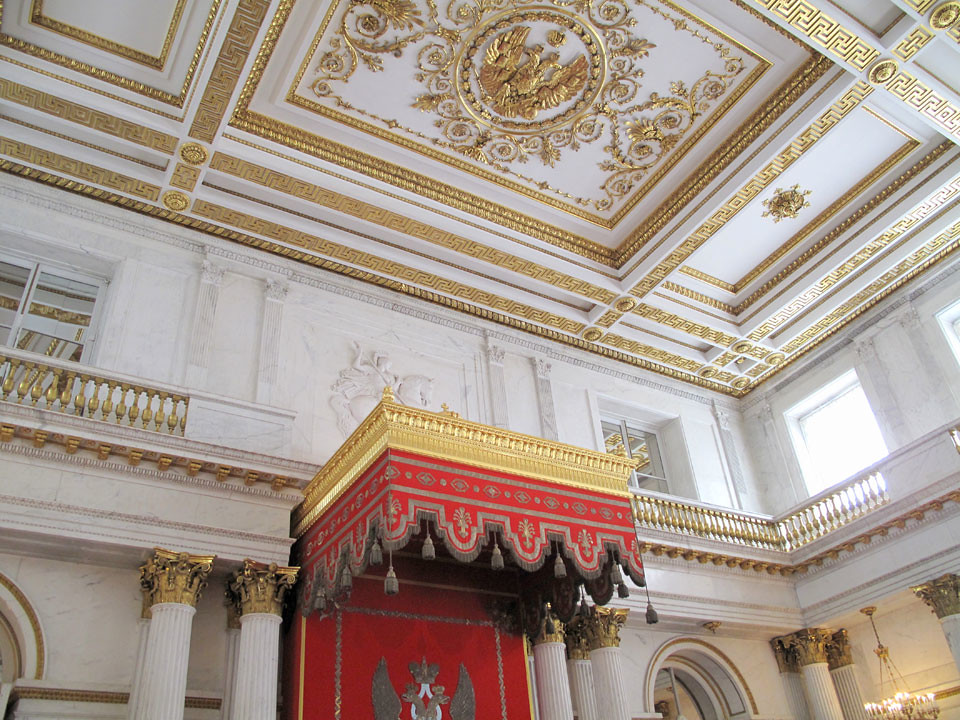
This is the first art museum that rivaled the artwork for me. The opulence is staggering. If you love great art and architecture, you would probably want to spend days here. At the very least, get a good guide who can show you the highlights. You’ll see what I mean in the photos that follow.
The sneak peek I posted last time is from the Jordan Staircase. This is the most beautiful stair hall I’ve ever seen and I took as many shots as I could….



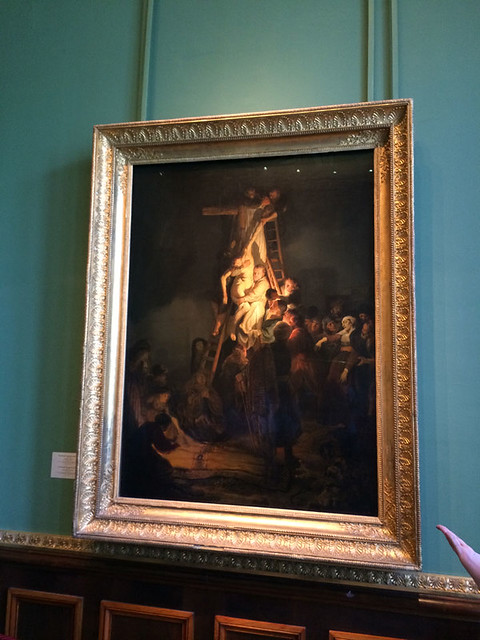
I wasn’t able to find out the name of the painting or the artist. It was fairly challenging staying with the group while trying to listen to the guide and take pictures. What a luxury it would be to walk at a leisurely pace and see everything.
Next, we moved on to the Pavilion Room, which was equally amazing:
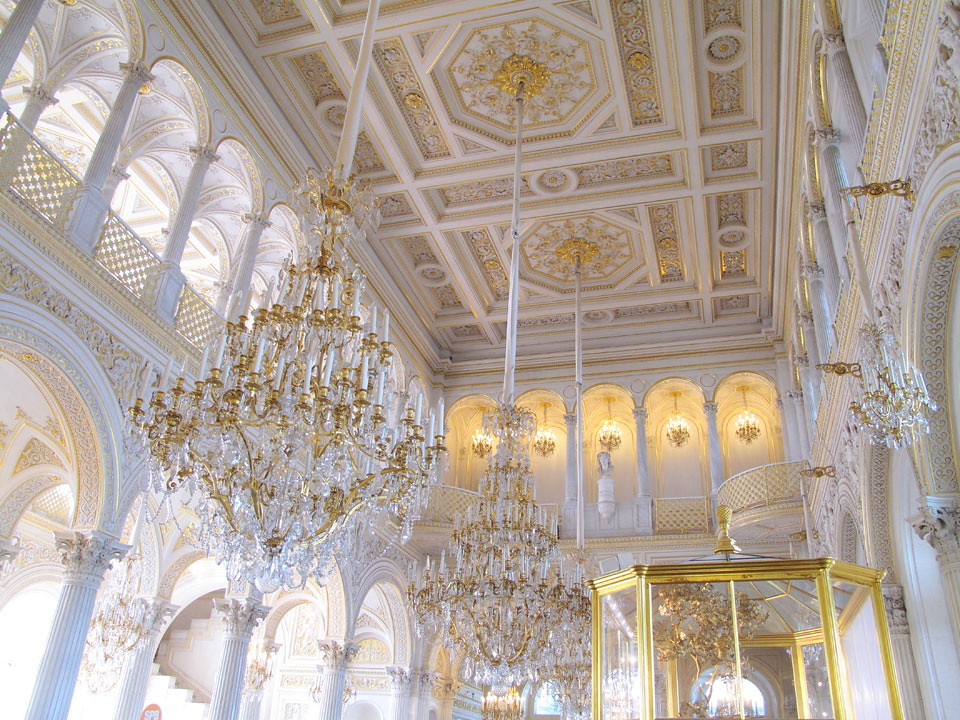
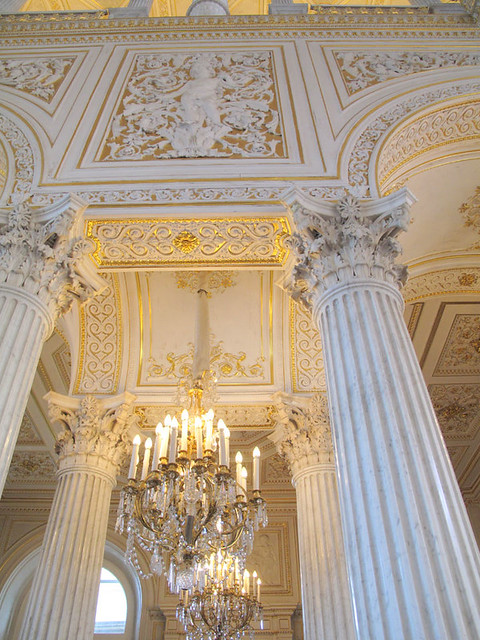
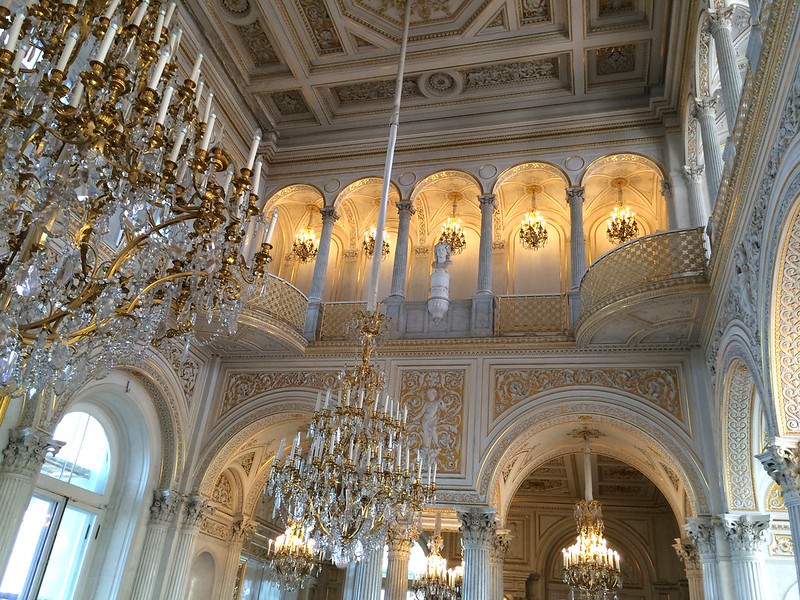
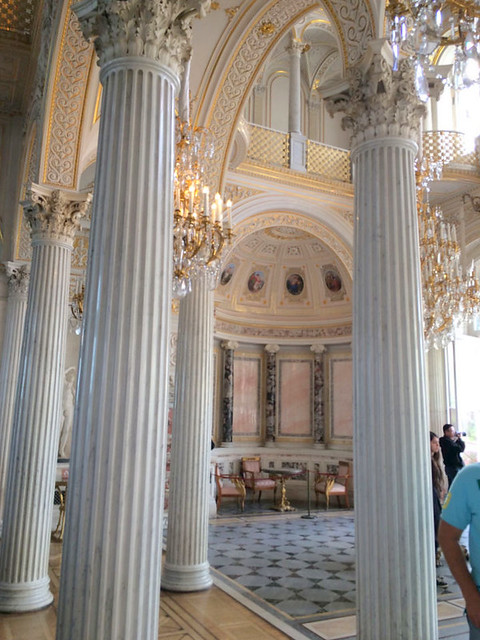
This hall houses one of the main attractions of the Hermitage: the Peacock Clock.
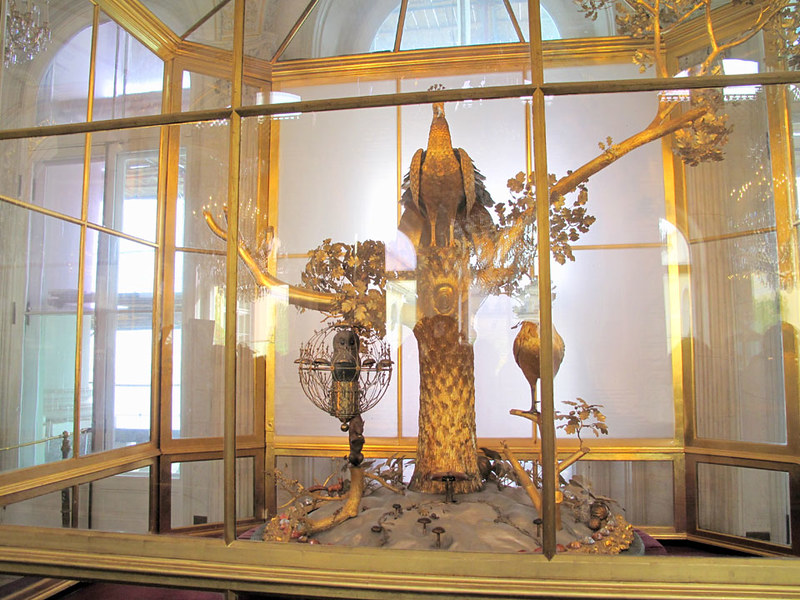
Grigory Potemkin commissioned James Cox, a London jeweler and goldsmith, to make a monumental automaton with a clock for the Empress’s Hermitage in 1777.
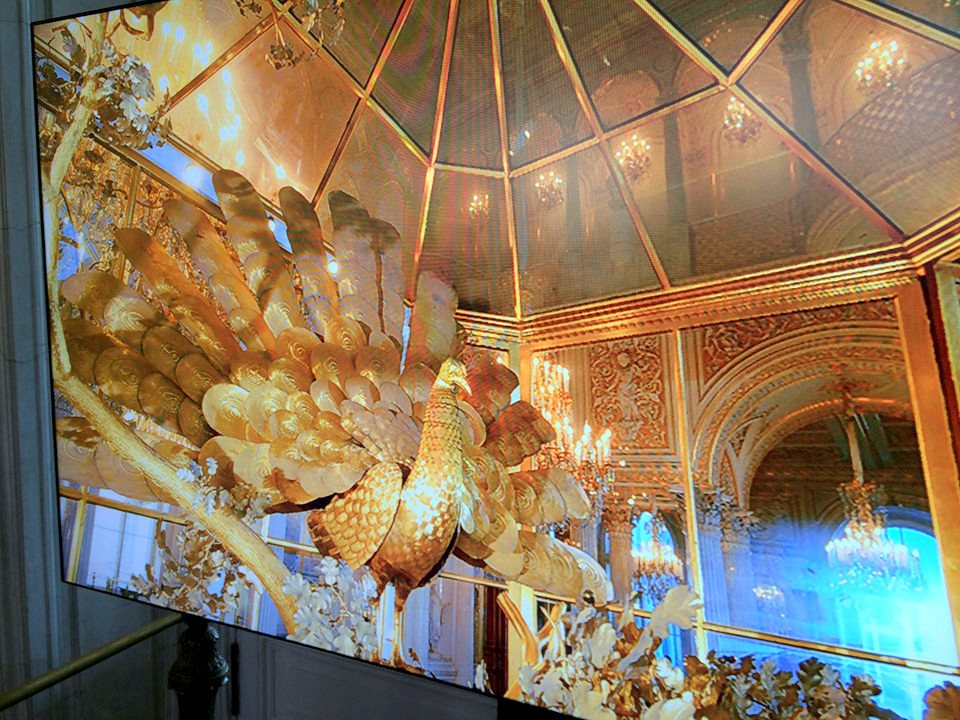
Four separate mechanisms are combined in the clock: three of them set the peacock, owl and cockerel in motion, while the fourth is the actual clock movement. These mechanisms are linked by a system of levers that ensures their operation in the correct sequence.
We were not there at the time of the movement, but there was a large video screen that showed it. I took this shot off the screen:
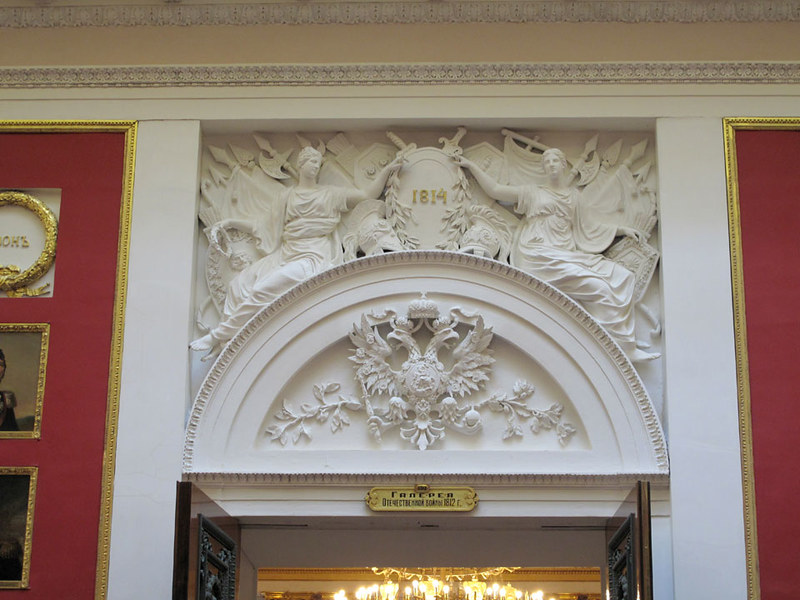
Looking back at the photos now, I see that just about every inch of the place was embellished with some kind of artwork. I especially liked a lot of the doors….
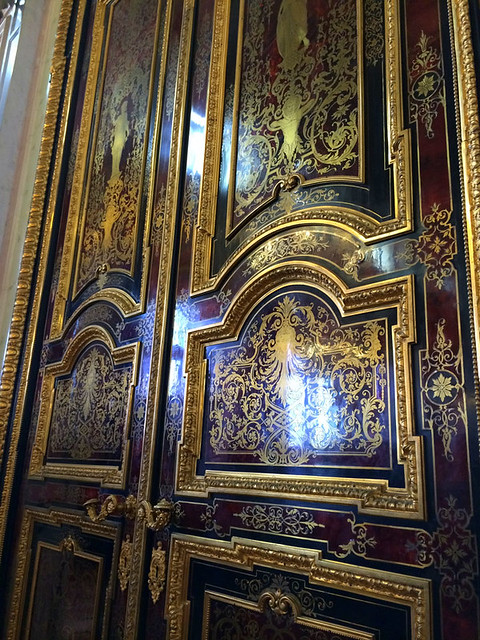

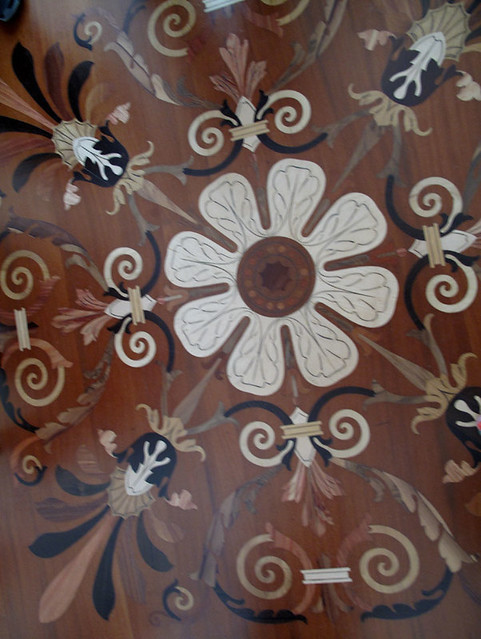
I believe tortoiseshell was used here.
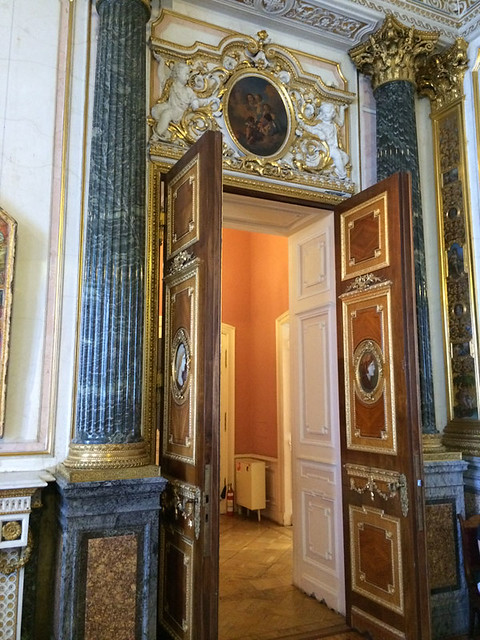
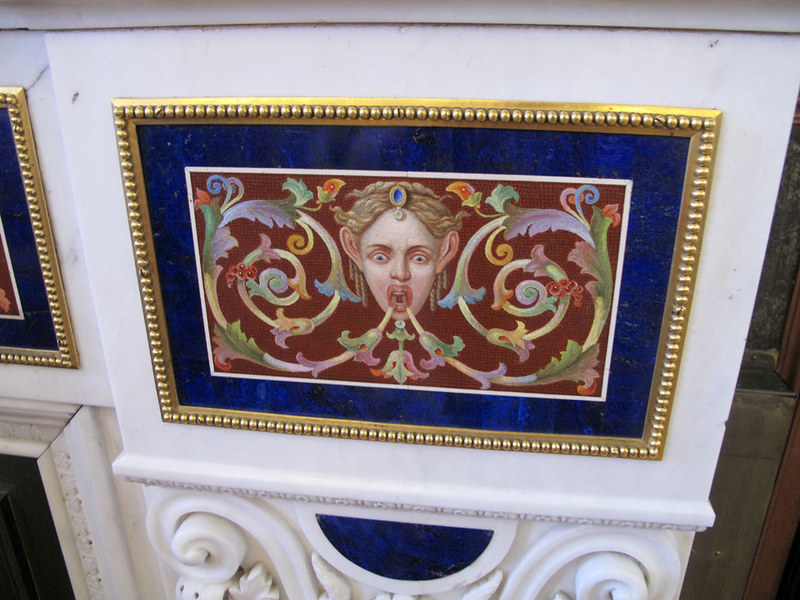
Can’t imagine how long it took to do these.
More in Part II. I’m going out of town this weekend and won’t be back until Monday night, so hope to post again next Wednesday or Friday.
Hope you all have a great weekend!
{carole}














 Pearls & Prose